
7 methods to research and analyse your audience for SEO
- SEO |
A new article on Search Engine Journal reports that you get more relevant website traffic and improve your conversions for better SEO results.

From a marketing perspective, you must have an overall understanding of your product, the problems it solves, and how to best communicate to your audience.
From a technical perspective, you must be able to create a foundation for your website that improves search performance.
Now, from a psychological perspective... that is where an SEO can really make a difference.
If you can learn how to not only identify your ideal website visitor but also determine who they are and what motivates them, your SEO work will really pay off. You'll have the traffic numbers and also the ROI to support your efforts.
Use keywords to gather demographics data
Keyword research is one of the core tasks of SEO. Keywords should be targeted and relevant to your products or services, which is something you likely already know.
Once you have a solid list of keywords, select the top five that represent your brand the best and find out the demographics associated with those words and phrases.
Google Trends will provide you with demographic information tied to the location and will show you how the keyword has trended over time. Google Trends also comes in handy during the pandemic when people's online behaviors were quickly shifting.
Identifying demographic information, including age, gender, and location can help you in SEO in many ways.
You can look for local link opportunities in the geographic areas where queries occur.
In terms of age and gender, you can determine topics, interests, and other terminology that is relevant to those groups.
Identify who is visiting your website
This method is kind of like painting the target around the arrow.
However, it is important to understand who is coming to your website and then you can determine if that is the correct audience.
One of the easiest ways to get this information is from Google Analytics.
Under the Audience section, you are able to view a range of audience information, including age, gender, location, and interests, as shown below:
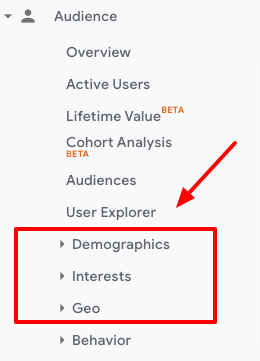
This data can give insight into the audience and will help you as you recommend content topics and target geographic areas.
On the other hand, you might look at this information and realize that it does not align with your organization's target markets.
In that case, you need to take a close look at your keywords and content to make sure there is no misalignment.
Analyse other brands
To gather information about your target audience, you can look beyond your own website and analyze other brands and competitors.
You would be looking for demographics and psychographics - basically, you want to collect as many insights as possible.
Similar to the last method, this data can give insight into the audience and will help you as you recommend content topics and target geographic areas.
You might also find some great link building ideas based on your interests.
Use social insights
Social platforms are one of the quickest ways to get information about an audience.
You can view follower/fan information directly on your company's Facebook page, as shown below:
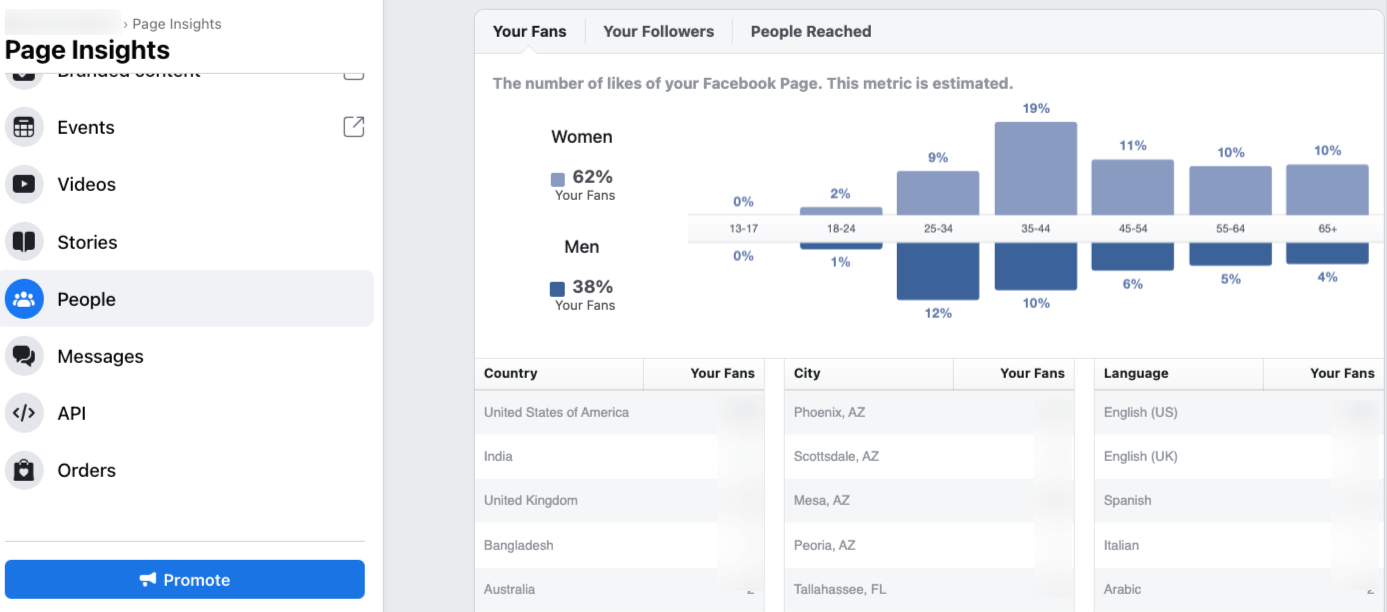
What's great about this tool is it also provides you with a word cloud to show you what users are talking about.
Send out surveys
This method is the most straightforward out of all of them on this list. If you want to understand your audience better, send out a survey.
To get a decent number of surveys returned, keep it short and sweet. Ask questions about basic demographics, overall interests, pain points, and needs.
Use the information you gather in the survey to identify content opportunities, including images and videos, keyword targets, etc.
Identify questions
With Google increasingly showing answers directly in SERPs, identifying common user questions has become that much more important.
Plus, we want to anticipate the long-tail queries of our potential audience, so we can get in front of them at the right time. There are many tools that provide common questions, including:
These tools pull from various data sources, so it is worthwhile to check out them all. Below is an example from AnswerThePublic.
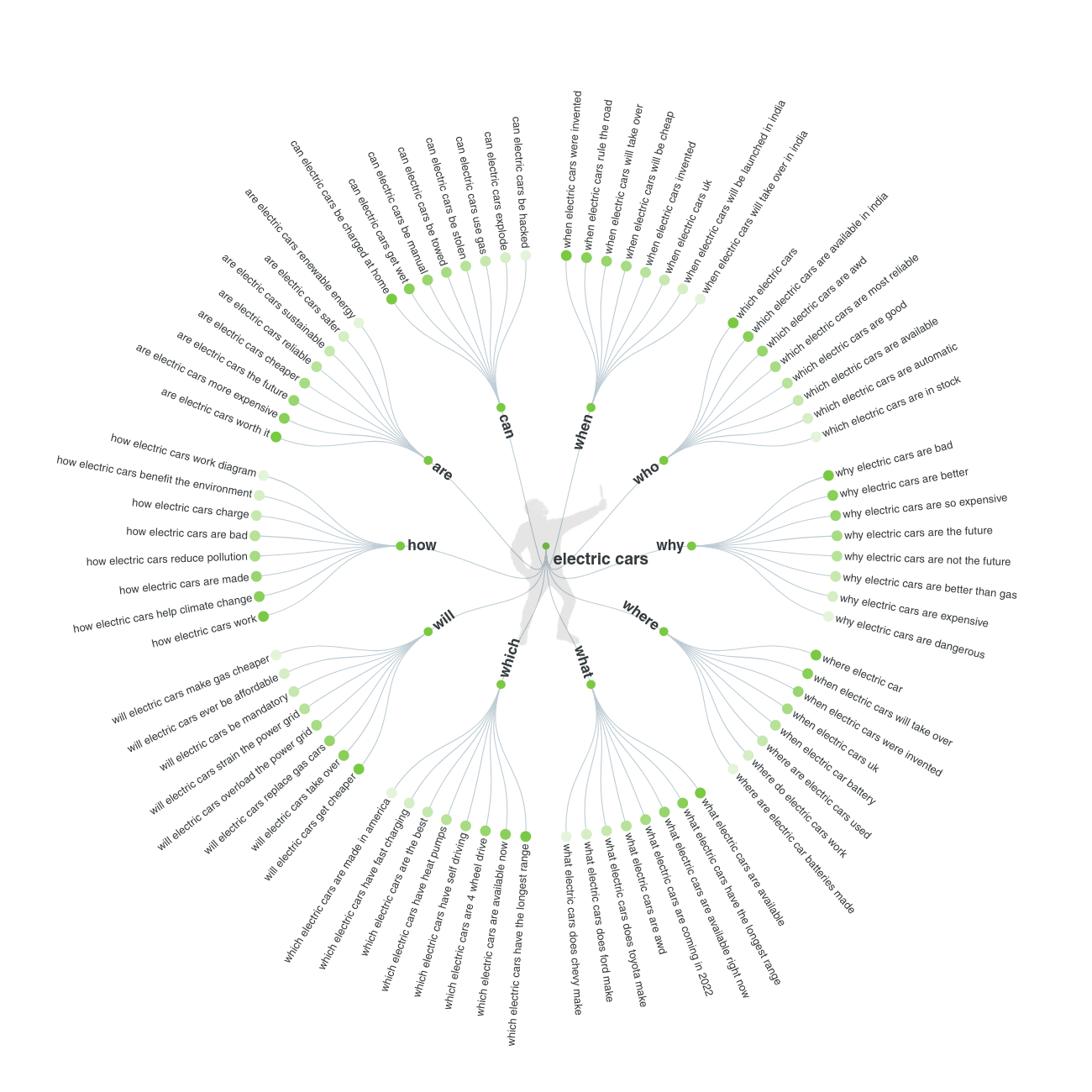
Create content around common questions to attract long-tail searches among your audience and to increase your odds of showing up as a direct answer in Google SERPs.
Research secondary data
Once you know age/interests/etc. of your audience, you can fill in the blanks through further research. Look for studies regarding one of the key aspects of your audience.
For example, if you determine that your audience is in the Baby Boomer generation, head to Google Scholar and look for published research on this group.
Use this additional research to sketch your personas and get a better view of who it is you are trying to target via SEO.
From a marketing perspective, you must have an overall understanding of your product, the problems it solves, and how to best communicate to your audience.
From a technical perspective, you must be able to create a foundation for your website that improves search performance.
Now, from a psychological perspective... that is where an SEO can really make a difference.
If you can learn how to not only identify your ideal website visitor but also determine who they are and what motivates them, your SEO work will really pay off. You'll have the traffic numbers and also the ROI to support your efforts.
Use keywords to gather demographics data
Keyword research is one of the core tasks of SEO. Keywords should be targeted and relevant to your products or services, which is something you likely already know.
Once you have a solid list of keywords, select the top five that represent your brand the best and find out the demographics associated with those words and phrases.
Google Trends will provide you with demographic information tied to the location and will show you how the keyword has trended over time. Google Trends also comes in handy during the pandemic when people's online behaviors were quickly shifting.
Identifying demographic information, including age, gender, and location can help you in SEO in many ways.
You can look for local link opportunities in the geographic areas where queries occur.
In terms of age and gender, you can determine topics, interests, and other terminology that is relevant to those groups.
Identify who is visiting your website
This method is kind of like painting the target around the arrow.
However, it is important to understand who is coming to your website and then you can determine if that is the correct audience.
One of the easiest ways to get this information is from Google Analytics.
Under the Audience section, you are able to view a range of audience information, including age, gender, location, and interests, as shown below:
This data can give insight into the audience and will help you as you recommend content topics and target geographic areas.
On the other hand, you might look at this information and realize that it does not align with your organization's target markets.
In that case, you need to take a close look at your keywords and content to make sure there is no misalignment.
Analyse other brands
To gather information about your target audience, you can look beyond your own website and analyze other brands and competitors.
You would be looking for demographics and psychographics - basically, you want to collect as many insights as possible.
Similar to the last method, this data can give insight into the audience and will help you as you recommend content topics and target geographic areas.
You might also find some great link building ideas based on your interests.
Use social insights
Social platforms are one of the quickest ways to get information about an audience.
You can view follower/fan information directly on your company's Facebook page, as shown below:
What's great about this tool is it also provides you with a word cloud to show you what users are talking about.
Send out surveys
This method is the most straightforward out of all of them on this list. If you want to understand your audience better, send out a survey.
To get a decent number of surveys returned, keep it short and sweet. Ask questions about basic demographics, overall interests, pain points, and needs.
Use the information you gather in the survey to identify content opportunities, including images and videos, keyword targets, etc.
Identify questions
With Google increasingly showing answers directly in SERPs, identifying common user questions has become that much more important.
Plus, we want to anticipate the long-tail queries of our potential audience, so we can get in front of them at the right time. There are many tools that provide common questions, including:
- AlsoAsked
- AnswerThePublic
- BuzzSumo
- Semrush
These tools pull from various data sources, so it is worthwhile to check out them all. Below is an example from AnswerThePublic.
Create content around common questions to attract long-tail searches among your audience and to increase your odds of showing up as a direct answer in Google SERPs.
Research secondary data
Once you know age/interests/etc. of your audience, you can fill in the blanks through further research. Look for studies regarding one of the key aspects of your audience.
For example, if you determine that your audience is in the Baby Boomer generation, head to Google Scholar and look for published research on this group.
Use this additional research to sketch your personas and get a better view of who it is you are trying to target via SEO.
Want to Future-Proof Your Online Business? Make Your Website SEO Friendly. Click here -> https://www.radon-media.com/services...-optimization/